


Amid doom-and-gloom inflation forecasts from Democrat-leaning UMich respondents and port shortage panic fueled by left-leaning corporate media, Goldman analysts have uncovered something very unexpected: early signs of life among lower-income consumers.
Goldman analysts Kate McShane, Mark Jordan, and others published a note to clients on Tuesday, analyzing lower-income consumers through the lens of online trends—such as app downloads, web traffic, and store traffic—for select discretionary retailers, including AAP, BJ, TGT, and WSM.
What McShane and her team found was that "the health of the lower-income consumer (defined as households that earn skew more positive than expected, with possible tailwind coming from lower gasoline prices, improved employment trends, and credit metrics."
While consumer confidence remains mixed and discretionary spending cautious, President Trump's pro-fossil fuel agenda—centered around policies like "drill, baby, drill"—has contributed to a drop in gas prices (Memorial Day Weekend gas prices were the lowest in years).
In key regions such as the Heartland and Deep South, where much of Trump's political base resides, the average price of regular gasoline at the pump has fallen below $3 a gallon, offering much-needed relief.
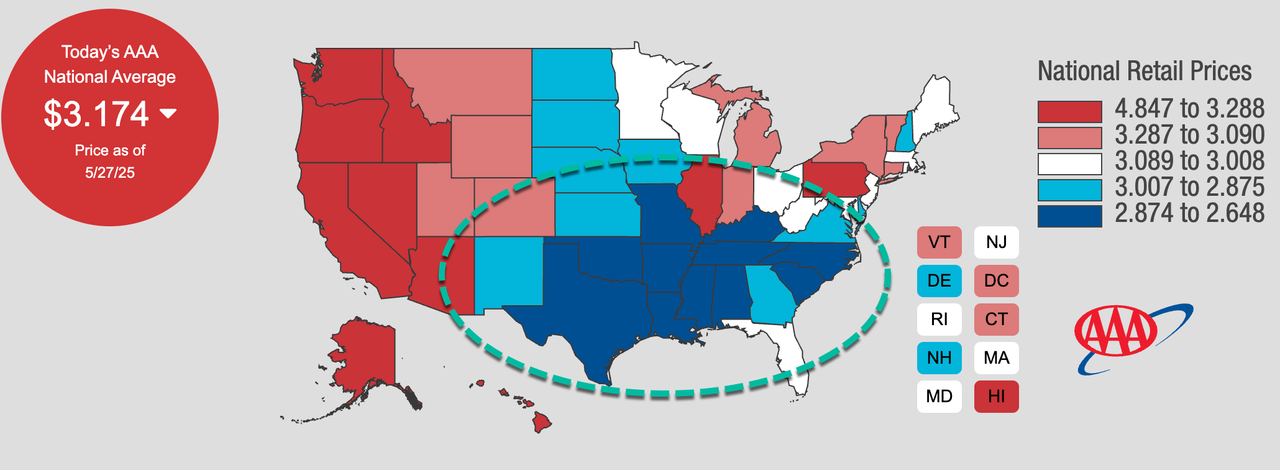
Gasoline is a non-discretionary expense for most consumers. When prices fall, this boosts spending in other categories, such as retail, dining, or travel, benefiting sectors like discount retailers, restaurants, and entertainment. In other words, the savings from the pump is often referred to as a "gas dividend," and this might explain Goldman's findings about some possible revival for the working poor.
Свежие комментарии